Hail damaged shingles
lose their granules and crack, letting water reach the decking.
Grapevine sits in one of the most hail prone parts of the United States. A single spring storm can crack shingles, dent vents, and loosen flashing across entire neighborhoods. The leak often does not show up during the hailstorm. It shows up during the next rain, when water finds its way through the damage and into the attic.
Written estimatesBefore any work beyond emergency extraction
Metered dryingDone when readings meet the dry standard
Insurance docsPhotos and readings adjusters expect
Local crewGrapevine only, answered 24/7

Grapevine sits in one of the most hail prone parts of the United States. A single spring storm can crack shingles, dent vents, and loosen flashing across entire neighborhoods. The leak often does not show up during the hailstorm. It shows up during the next rain, when water finds its way through the damage and into the attic.
lose their granules and crack, letting water reach the decking.
open gaps along the edges and ridge.
around chimneys, skylights, and vents lets water run straight down into the framing.
overflow behind the fascia and into the soffit and walls.
gets through windows, doors, and siding that normally stay dry.
punch through roofs in neighborhoods with large, mature trees.
Water from a roof leak travels before it shows. It soaks the roof decking, then the attic insulation, which acts like a sponge. Only after the insulation is full does water reach the ceiling drywall and show up as a stain. By the time you see the stain, the attic is often far wetter than the room below.
You reach us at (817) 555-0192. We ask where the water is, whether it looks clean or dirty, and whether power is safe. If the source is still running, we walk you through shutting it off.
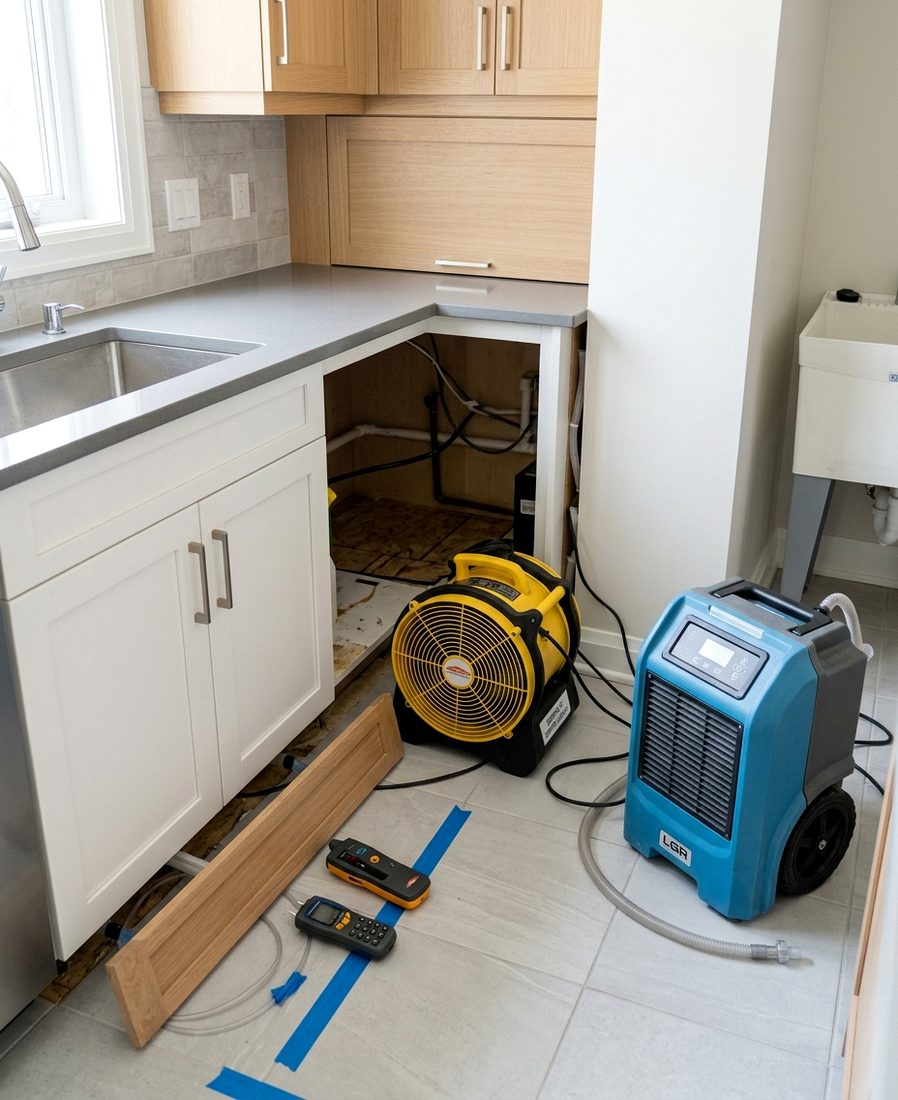
We find the source, map moisture with meters and a thermal camera, start extraction, and leave you with photos and readings for insurance.
Air movers and dehumidifiers run until readings meet the dry standard. Then we clean, treat, and handle repairs so you keep one point of contact.
You reach us at (817) 555-0192. We ask where the water is, whether it looks clean or dirty, and whether power is safe. If the source is still running, we walk you through shutting it off.
We tarp damaged roof sections or board up broken windows so the next rain does not add to the damage.
We inspect decking, framing, and insulation, and remove soaked insulation that will not dry.
Wet ceiling drywall is either dried in place or removed if it is sagging or stained through. See ceiling water damage.
Walls, framing, and floors below the leak get structural drying.
Photos of the roof damage, attic, and interior support your claim.
Insulation, drywall, texture, and paint are restored after drying. Your roofer handles the roof itself.
Most hail and severe thunderstorms hit North Texas from March through June, with a second smaller season in the fall. After any major storm, it is worth checking your attic with a flashlight for wet insulation or dark spots on the decking, even if the ceilings look fine.
Straight answers for Grapevine homeowners and businesses.
(817) 555-0192 →Water damage from a sudden storm is usually covered. Damage from an old, worn roof that leaked slowly over time is often not. Documenting the storm date helps.
We handle emergency tarping and all interior water damage. A licensed roofer repairs or replaces the roof, and we can work alongside them.
Yes. A small stain usually means the insulation above is already soaked. Call so we can check the attic before mold starts.
Batt insulation can sometimes be dried if the leak was brief. Blown insulation that got soaked usually needs to be removed and replaced.
Tarping is usually done on the first visit, weather permitting, so the next rain does not add to the damage.
Every hour you wait, the job gets bigger. Call a Grapevine crew now.
Call Now →The fastest way to get help is a phone call. There are no forms to fill out. A live person answers 24 hours a day.