Heavy spring and fall storms
North Texas gets intense rain in short bursts. When storm drains and yards cannot keep up, water flows toward the lowest point, which is often a garage door, patio door, or a slab that sits slightly below the yard.
Flood damage is different from a burst pipe. When water comes in from outside, it brings soil, lawn chemicals, animal waste, and often sewage with it. That changes everything about the cleanup. Drying alone is not enough. Flood damage cleanup in Grapevine means removing porous materials that cannot be saved, then sanitizing and drying the rest. As a flood restoration company in Grapevine, we provide flood damage removal service for Grapevine, TX homes when outside water comes inside. That is flood damage restoration for Grapevine after rising water, not a clean-water pipe leak.
Written estimatesBefore any work beyond emergency extraction
Metered dryingDone when readings meet the dry standard
Insurance docsPhotos and readings adjusters expect
Local crewGrapevine only, answered 24/7
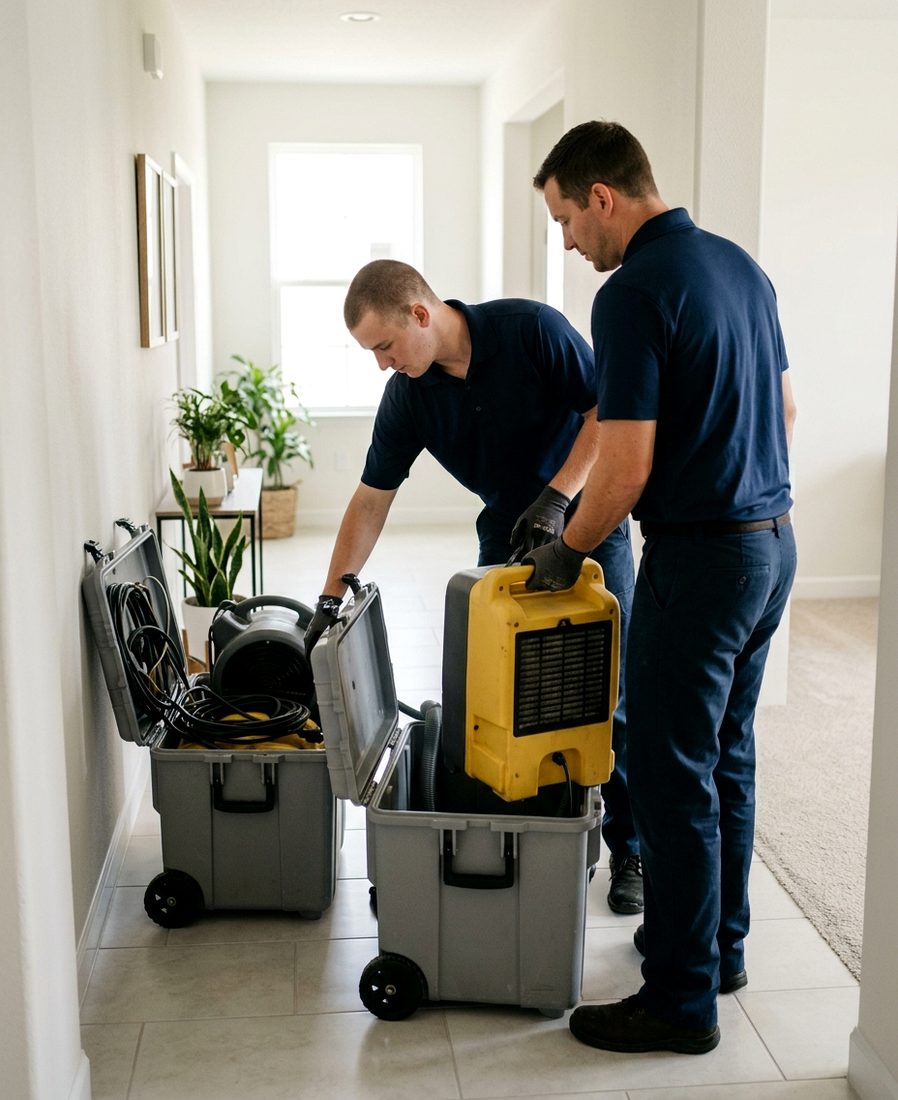
Flood damage is different from a burst pipe. When water comes in from outside, it brings soil, lawn chemicals, animal waste, and often sewage with it. That changes everything about the cleanup. Drying alone is not enough. Flood damage cleanup in Grapevine means removing porous materials that cannot be saved, then sanitizing and drying the rest. As a flood restoration company in Grapevine, we provide flood damage removal service for Grapevine, TX homes when outside water comes inside. That is flood damage restoration for Grapevine after rising water, not a clean-water pipe leak.
North Texas gets intense rain in short bursts. When storm drains and yards cannot keep up, water flows toward the lowest point, which is often a garage door, patio door, or a slab that sits slightly below the yard.
Properties near Big Bear Creek, Denton Creek, and the smaller drainage channels through town can see water rise quickly during a stalled storm.
In very wet years the lake has risen high enough to cover parks and close low roads near the shoreline. Properties closest to the water carry the most risk.
Yards that slope toward the house, clogged gutters, and downspouts that dump next to the foundation can push water inside even in an ordinary storm.
Restoration standards treat outside floodwater as the most contaminated category of water. In practice, that means:
touched by floodwater are removed, not dried.
are cut out above the water line, usually a foot or more above where water reached.
made of MDF or particleboard are removed. Solid wood may be cleaned and saved.
like tile, concrete, and studs are cleaned and disinfected, then dried.
like furniture, clothing, and documents are sorted into what can be cleaned and what must be thrown out. See contents pack out and restoration.
We check power, gas, and structural safety before anyone works inside.
Deep water is pumped out, then floors are extracted.
Wet porous materials are cut out and bagged for disposal.
Every remaining surface the water touched is cleaned and treated.
Structural drying runs until readings reach the dry standard.
Drywall, insulation, trim, and flooring are replaced.
Standard homeowners policies in Texas usually do not cover rising water from outside. That requires flood insurance, often through the National Flood Insurance Program. Water that enters through a damaged roof during a storm is a different matter and is often covered by homeowners insurance. We help you document the damage either way. See insurance claim help.
You reach us at (817) 508-6314. We ask where the water is, whether it looks clean or dirty, and whether power is safe. If the source is still running, we walk you through shutting it off.
We find the source, map moisture with meters and a thermal camera, start extraction, and leave you with photos and readings for insurance.
Air movers and dehumidifiers run until readings meet the dry standard. Then we clean, treat, and handle repairs so you keep one point of contact.
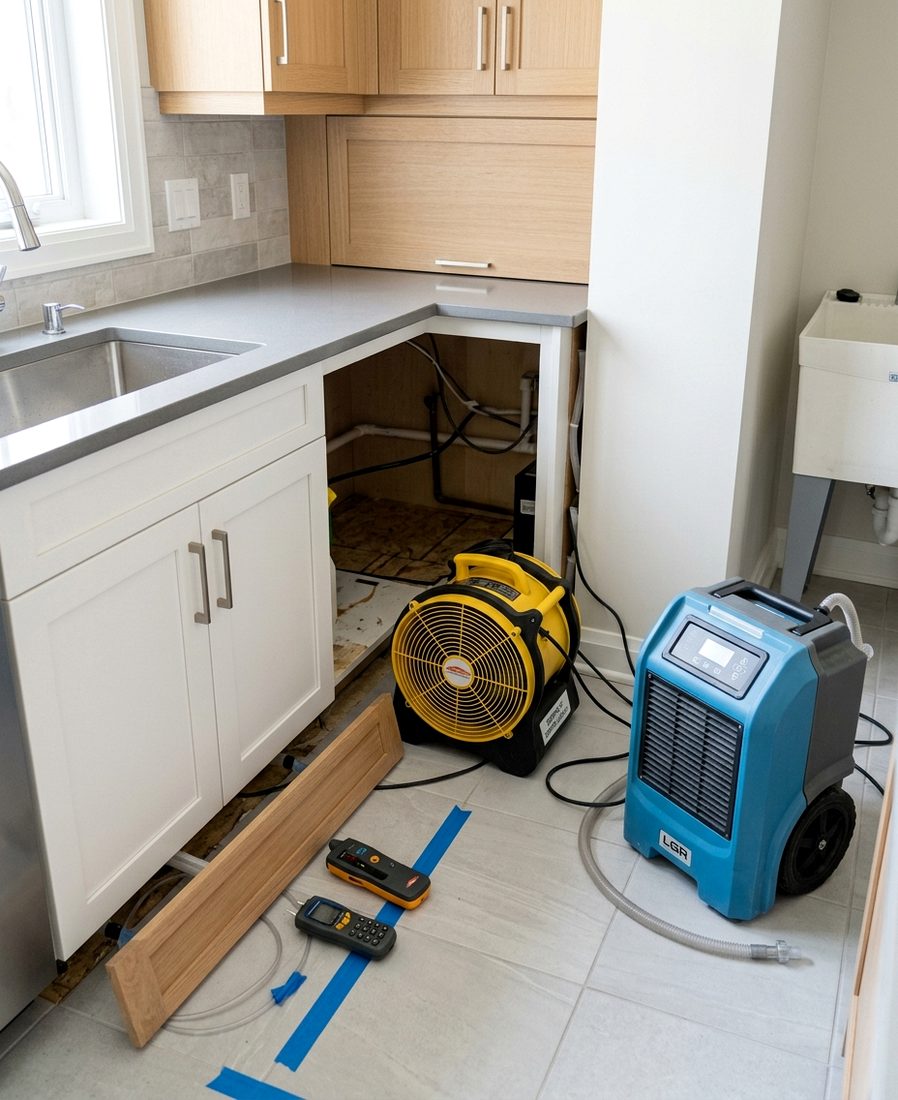
You reach us at (817) 508-6314. We ask where the water is, whether it looks clean or dirty, and whether power is safe. If the source is still running, we walk you through shutting it off.
Straight answers for Grapevine homeowners and businesses.
(817) 508-6314 →Small amounts on hard floors, maybe, with gloves and boots. For carpet, drywall, or anything more than an inch or two, the contamination risk makes professional cleanup the safer choice.
Drywall wicks water upward past the visible line. Cutting above it removes the contaminated and wet material so mold does not grow inside the wall.
It depends on how much of the home was affected. With widespread floodwater, we often recommend staying elsewhere until contaminated materials are removed.
As soon as the water stops rising and it is safe to enter. Mold can start in 24 to 48 hours.
Yes. Shops, offices, and restaurants get the same cleanup, planned to get you open again as fast as possible.
Every hour you wait, the job gets bigger. Call a Grapevine crew now.
Call Now →The fastest way to get help is a phone call. There are no forms to fill out. A live person answers 24 hours a day.